 Perplexity
 Grok
GrokA zero baseline became a scoped, verifiable plan with full competitor coverage, full gap coverage, and deployment-ready asset groups.
Back to case studiesEntity-readiness plan
AI consulting brand: turning a flat baseline into an entity plan
This AI consulting brand had no measured AI visibility at the start. New Reward used competitor and gap evidence to build a clear entity-readiness plan for future authority work.
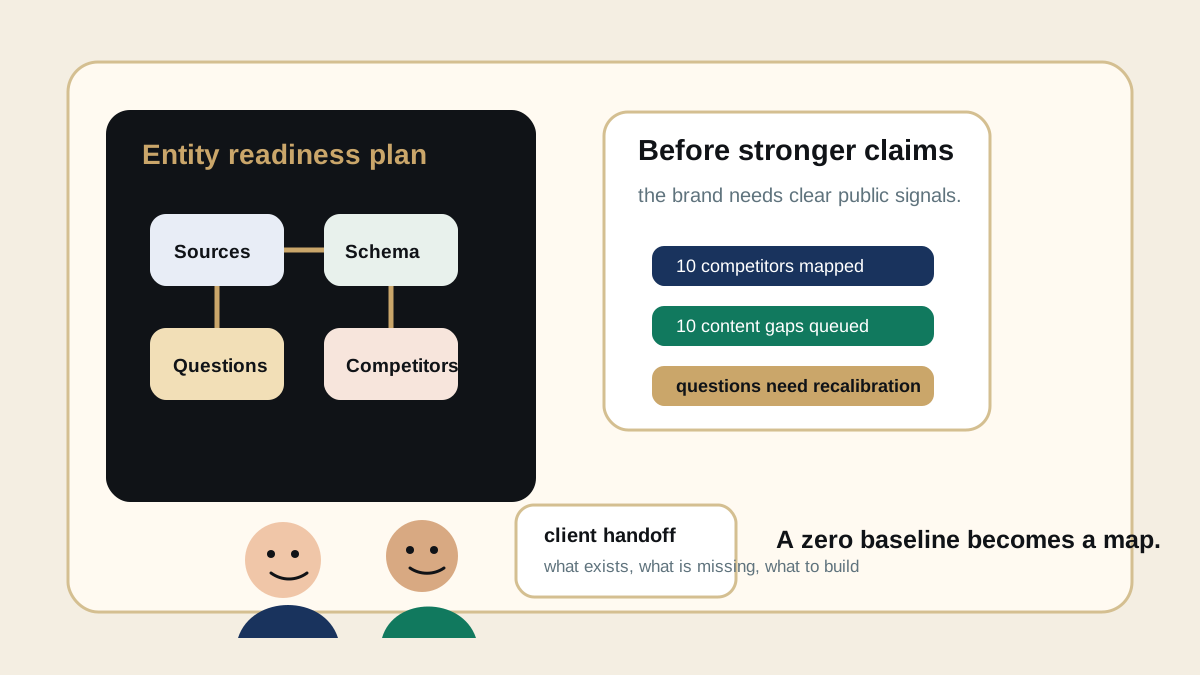 AI consulting entity map
An entity-readiness map: sources, schema, questions, and competitors organized before stronger answer-engine claims are made.
Visual boundary: New case-specific illustration of the entity map, drawn from the package numbers on this page.
This case is framed as operational proof.
Before-and-after percentages are published once both sides of the window are source-backed.
The journey
Problem to proof.
01
Problem
The measured AI visibility score was 0/100. The business was not being surfaced in the tested AI answers, even though the market had clear competitor signals.
02
Action
New Reward mapped competitors, found content gaps, prepared recommendations, checked package quality, and flagged the question set for recalibration.
03
Result
The client received a complete competitor and content-gap map plus 23 readiness asset groups for future implementation.
04
Why it matters
AI consulting buyers need trust before they book. If the brand is missing from answer engines, the business has to build clearer entity, content, and proof signals.
Sales use
How to use this proof in a buyer conversation.
Buyer question
How do we turn a zero AI-visibility baseline into a credible entity plan?
Use this for consulting, agency, and expert-service buyers that need authority structure before publishing more content.
Objection handled: The buyer may want citations immediately; the case shows the source, schema, content, and competitor map needed first.
Best fit
What we measure next
- Recalibrated benchmark questions
- Post-implementation citation and mention scan
Client context
Anonymized AI consulting client
- Industry
- AI consulting and professional services
- Timeframe
- February 2026 package audit
- Starting point
- The measured baseline was 0/100 across the AI engines in the audit.
Proof boundary
This proves package readiness and planning depth: the competitor map, the content-gap queue, and 23 readiness asset groups from the February 2026 audit.
Verified resultA zero baseline became a scoped, verifiable plan with full competitor coverage, full gap coverage, and deployment-ready asset groups.
Inspectable work
What shipped and where the proof comes from.
What shipped
- Mapped 10 competitors and 10 content gaps.
- Prepared 8 recommendations across content, schema, and training outputs.
- Checked package integrity, JSON validity, client scoping, and placeholder cleanup.
- Flagged the benchmark-question set as too geography-heavy and set recalibration as the next step.
Source notes
Deep package audit
Internal package audit dated 2026-02-25
Package audit data
Internal deployment-package audit data dated 2026-02-25
Next step
Turn this proof into the right offer lane.
Start from the evidence, then choose the work that matches the buyer path.